Insights and Pathways from the 2025 National Systems Mapping Workshop
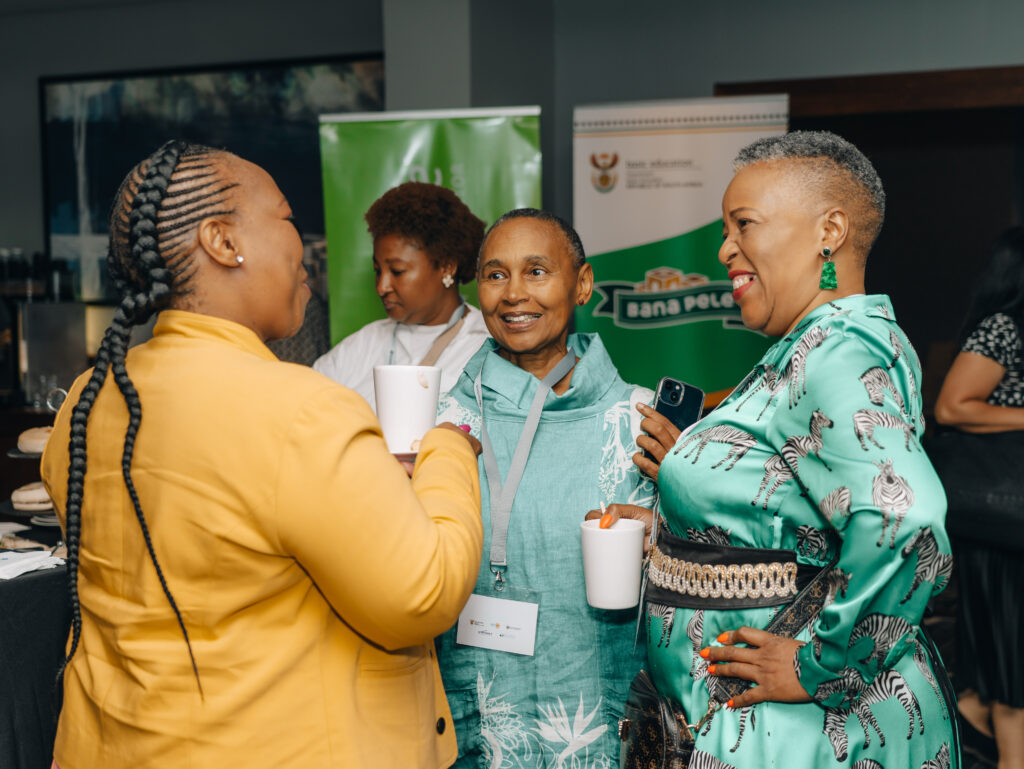
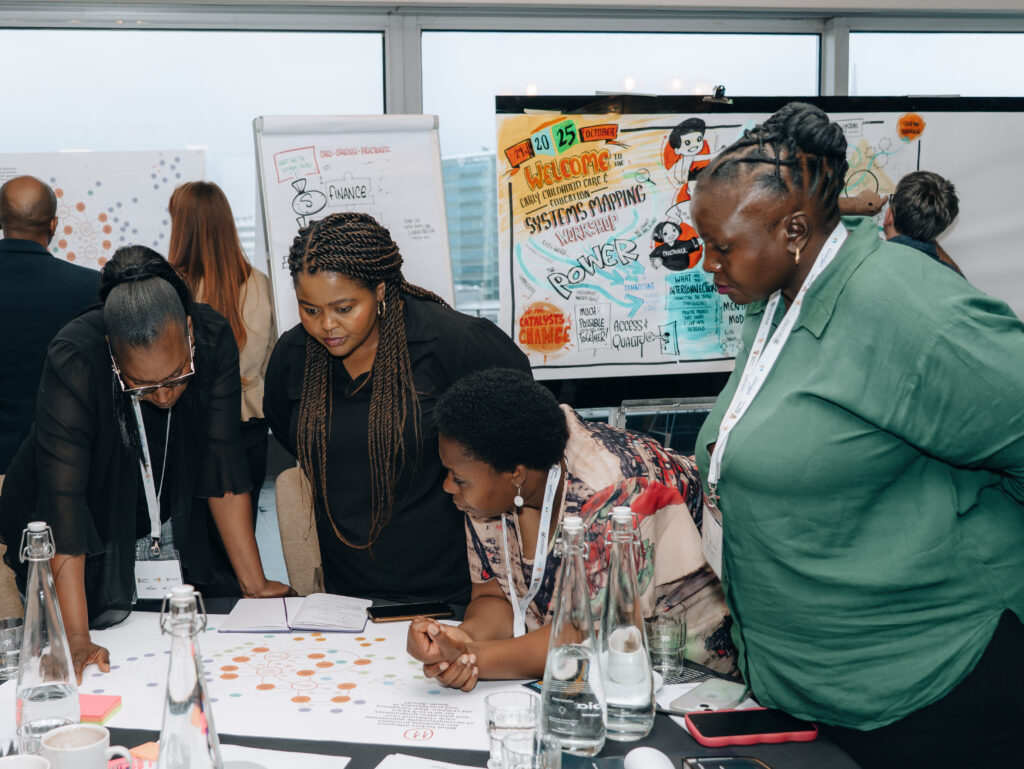
In October 2025, SmartStart, the Department of Basic Education (DBE), Ilifa Labantwana, Harambee Youth Employment Accelerator, and the Early Childhood Development Action Network (ECDAN) convened a two-day Early Childhood Care and Education (ECCE) Systems Mapping Workshop. Early childhood practitioners, parents, government officials, civil society organisations, funders, academics, and international partners – all key role-players in children’s welfare, came together to examine how South Africa’s ECCE system functions in practice, and to identify the shifts necessary to reach every child, especially the most excluded. This took place in the context of significant strides towards the goal of universal ECCE access in recent years.
The report outlines key findings from the session, and highlights stakeholder insight on forging more deliberate public-private partnerships around shared goals. It calls for elevating the value of care work, centering families and communities in solutions and driving a fundamental mindset shift to make sustainable change a reality.
SmartStart’s home-based early learning model is garnering the attention of international audiences. High-level delegations from Ethiopia and Uganda visited Johannesburg to explore how we empower women in the lowest-income communities to deliver ECD at scale without costly infrastructure.
Ethiopian delegates learn scalable ECD model
During August, Ethiopia’s School Readiness Initiative (ESRI) Executive Director Mr. Menelik Desta Argaw and Dr. Atsede Teklehaimanot, Head of the Developmental and Behavioural Paediatrics Unit at Addis Ababa University’s Tikur Anbessa Specialized Hospital, visited SmartStart sites around Johannesburg.
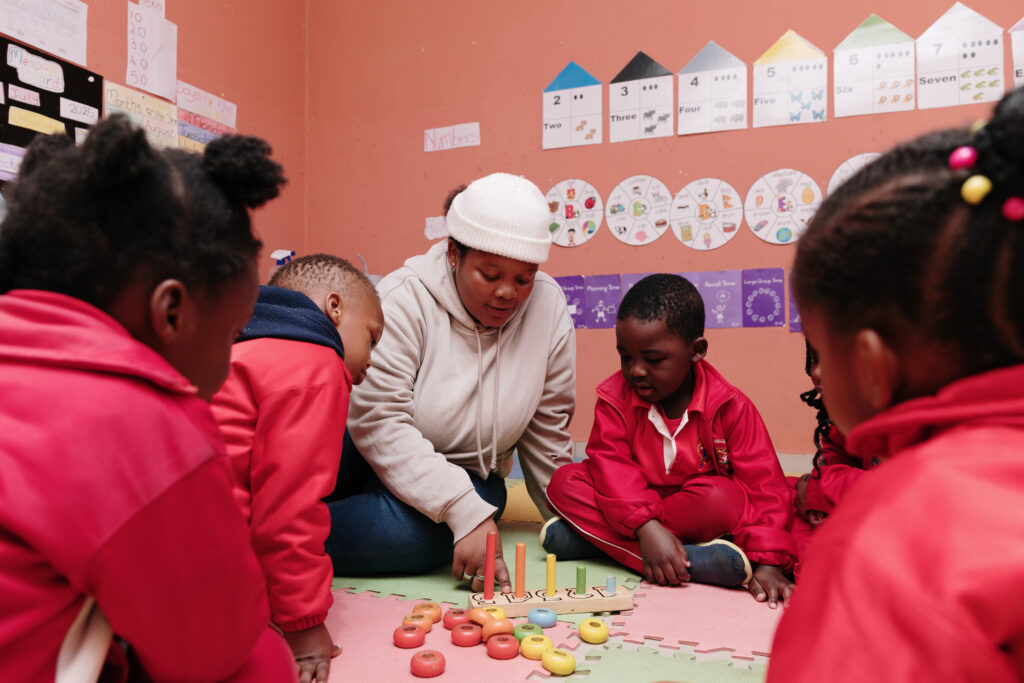
ESRI trains pre-school teachers and parents for holistic child development, alongside health screening, mental health support, and mother empowerment programmes. Over two days, they delved deeply into how our almost 15 000 practitioners transform their homes and community spaces such as churches and community halls into learning hubs that reach over 150 000 children weekly and how this would work in the Ethiopian context.
Ugandan Ministry benchmarks ECD policy practice
In November, Uganda’s Ministry of Education and Sports Pre-Primary Division, facilitated by ELMA Philanthropies, met with the Department of Basic Education (DBE) and spent time examining SmartStart’s policy-practice interface.
Delegates praised the quality of our home-based programmes, discussing government’s dual role as regulator while enabling community assets. SmartStart showed how lowered regulatory barriers turns community women into ECD practitioners serving excluded children.
Both delegations validated SmartStart’s core logic:
Leveraging existing homes and community spaces, recognising the strength inherent in communities.
Empowering women to create sustainable ECD enterprises that are changing children’s development and learning outcomes in real time.
Using digital technology and peer networks to scale affordable early learning in low-income communities across the country.
While Ethiopia seeks civil society adaptation and Uganda explores policy reform, delegations from both countries recognise SmartStart’s potential as a Global South blueprint for universal ECD access.
SmartStart’s Week of the Stars conference at the Indaba Hotel in Fourways, Sandton, brought together 12 implementing partners, frontline staff such as call centre agents, coaches, hub personnel, programme leads, and trainers to celebrate 10 years closing South Africa early learning gap in quintiles 1 and 2 communities.
The Night of the Stars awards recognised partner organisations and individuals whose exceptional performance has propelled the network forward, and drives 15 000 SmartStarters who server over 150 000 children weekly.
Four-day gathering
On days 1-3, workshops tackled shared challenges with frontline staff and partner leadership collaborating on solutions.
Night of the Stars awards gala was hosted by Nicole Biondi and honoured SmartStart’s partners organisations and standout individuals. The evening’s keynote was delivered by Kulula Manona, Chief Director: Foundations for Learning at the Department of Basic Education. She emphasised Early Childhood Development’s (ECD) critical role in national progress, affirming the vital contributions of private and social sector partners. “Never for once think we do not know who the real champions are for this work and what has been achieved for children,” she said, underscoring the foundational strength these collaborations build for South Africa’s future.
Voices from a decade of transformation
Marking SmartStart’s 10th anniversary, the event featured powerful reflection from key figures. Ntjantja Ned, Director of Masoleng Rising, recalled the founding vision of partnering closely with government, municipalities, and communities “to meet children where they are.” David Harrison, CEO of the DGM Trust, described the network as “a collective brain and neural system creating consciousness about children” in society.
Mary Venter, Executive Director of Khululeka, highlighted the untapped potential within partnerships: “The true power of this partnership can only be realised if we all unlock our own potential, she said” expressing gratitude to every contributor driving the organisation’s success. SmartStart CEO Grace Matlhape echoed this sentiment, stressing a shared commitment to quality ECD provision and the “once in a lifetime opportunity” to reimagine collaboration. She thanked partners for their decade-long trust and outlined SmartStart’s future as an “open network for public good” poised to deliver universal access to quality early learning for every child.
Week of the Stars served as an important bridge in SmartStart’s landmark year, connecting to provincial SmartStarters Unite celebrations. Through these gatherings, the network honoured not only its past achievements, but also charted a bold path forward.