South Africa stands at a crossroads in early childhood care and education (ECCE). The 2030 Strategy for ECD Programmes, Children’s Amendment Bill, mass registration drive, and rising public investment signal real political will for universal access. SmartStart proves home- and community-based programmes can reach excluded children at scale.
Yet fragmentation stalls progress given regulatory complexity, undervalued practitioners, uneven access, and siloed efforts across government, NGOs, and communities.
Systems mapping workshop
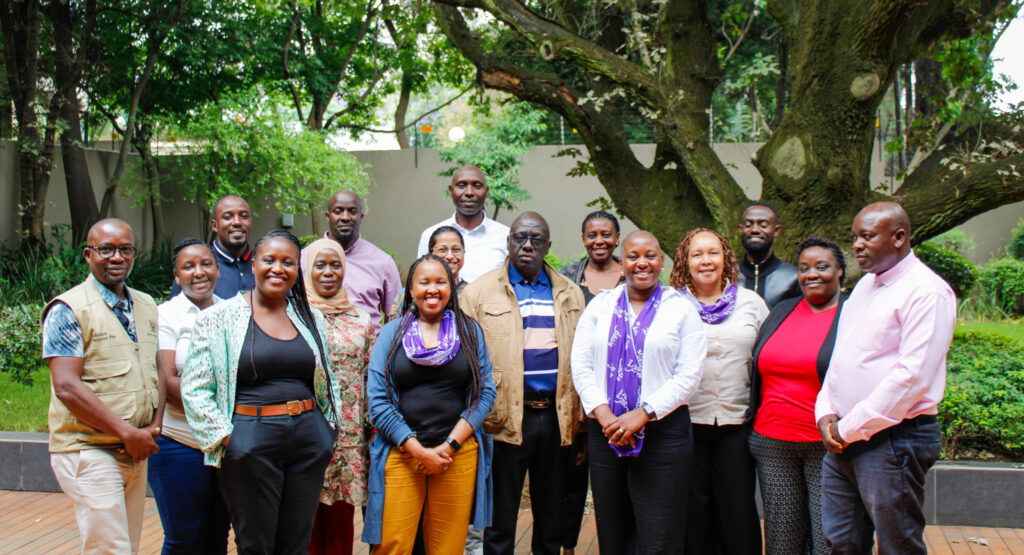
SmartStart co-hosted a landmark ECCE Systems Mapping Workshop in Johannesburg with the Department of Basic Education (DBE), Ilifa Labantwana, Harambee Youth Employment Accelerator, and ECDAN. Over two days, diverse voices of practitioners, parents, officials, funders, academics, and global peers from India and Peru, decoded coordination barriers using systems thinking.
Looking beyond symptoms using the iceberg model
Traditional fixes treat ECCE symptoms in isolation: build more crèches, train more practitioners, advocate for more policy. Systems thinking dives exposing:
- Events (what we see)
- Patterns (what repeats),
- Structures (what enables them)
- Mental models (deep beliefs).
Realities surfaced
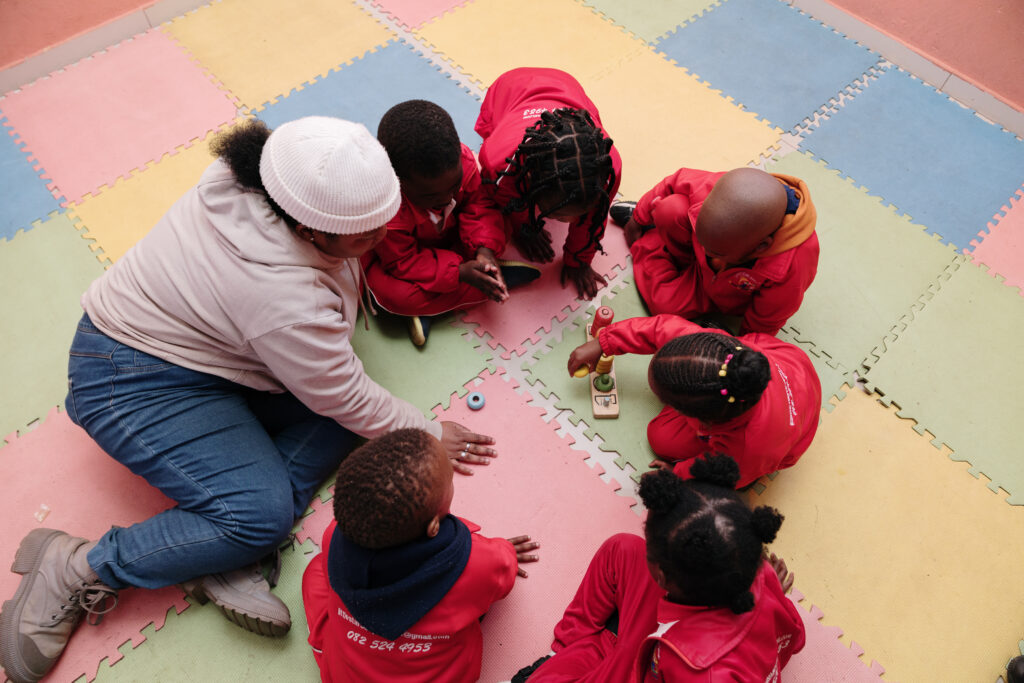
During the workshop participants shared insights into their realities. Practitioners expressed feelings of chronic undervaluation as care work is often seen solely as “women’s work” or unskilled labour and as such, remuneration is woefully inadequate and they often find themselves buried in red tape without support. Caregivers highlighted economic pressures, safety fears, transport barriers, and gendered child-rearing norms as highly influential in their daily choices. Participants also identified the compounding nature of inequality for children, especially those with disabilities, that often, early barriers are ignored and that formal Grade R is often seen as the “real” start. These are not isolated issues but interconnected feedback loops.
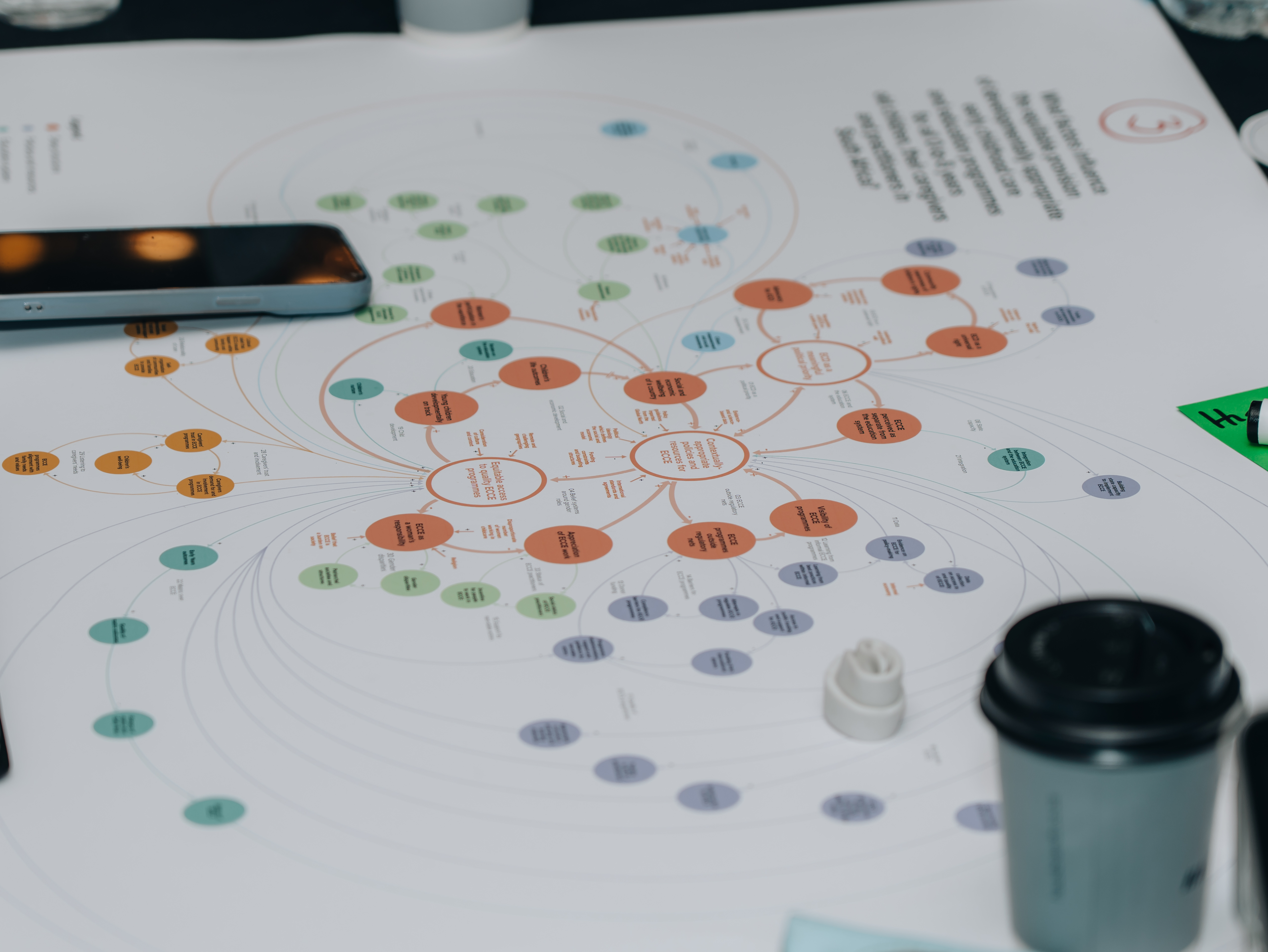
Using a global ECCE systems map, a causal-loop diagram that shows how different factors interact, reinforce one another, and shape how ECCE operates in South Africa, participants surfaced different experiences, tested assumptions, and explores ways of achieving more coordinated, high-leverage action across the ecosystem. Through its close interrogation, participants surfaced gaps on the map, including:
- Deep structure blind spots: Family practices, social norms, nutrition/security basics underrepresented as the map leans heavily on law, policy and political priority.
- State vs. reality: Map assumes formal capacity while ECCE in South Africa leans heavily on informal/non-state actors.
- Naming the exclusion: Migrant and other undocumented children, child-headed households, disabilities need explicit focus that reflects the unique challenges of each group, not a misnomer such as “vulnerable children”.
Participants did not limit their engagement to just diagnosing the problem, but proposed necessary high-leverage changes:
- Stronger national-provincial-local alignment as well as state-NGO collaboration for registration or compliance support.
- Better wages, stability, career pathways, mentoring and professional support through existing mechanisms such as Social Employment Fund (SEF), SETAs and other funding streams
- Two-way information flows between policymakers and practitioners are needed, ensuring that decisions are informed by what is happening on the ground.
- Mapping “who does what” to cut duplication, and leveraging shared assets such as curriculum, training materials and digital tools.
- Engage parents/local leaders to shift norms, build demand. Participants emphasised the need to move from designing for communities to working with them, ensuring that local voices influence decisions about resources, programme design and implementation.
The workshop made one truth impossible to ignore: progress will not come from doing more of the same. It will come from organising ourselves differently, listening differently, and widening the circle of who shapes solutions.
Real transformation will require working alongside those who influence other parts of the system – feminist and labour movements, unions, local leaders, community networks, government departments we rarely bring into ECCE conversations and many others – recognising that early learning does not live in a silo, and neither should we.