29 October 2026

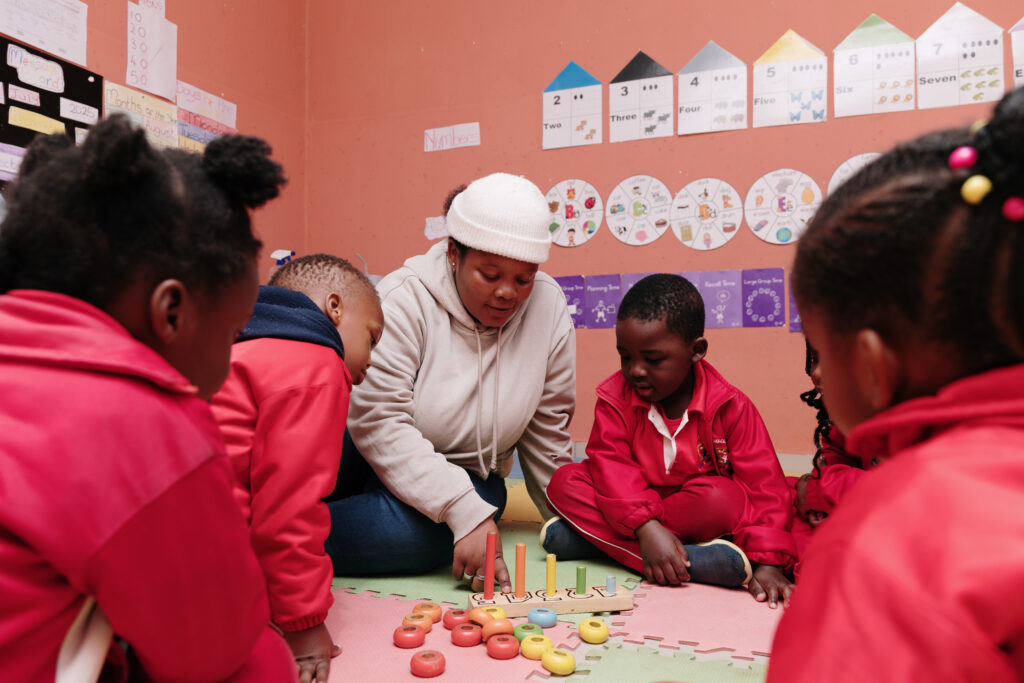
Every morning across South Africa, women open their homes and community spaces to children. They prepare meals, comfort a crying toddler, facilitate learning through play, reassure anxious parents and create the conditions in which children can learn, grow and feel safe.

Their work is often described as childcare. It is much more than that, however.

It is care work. It is early learning. It is employment, and, for many families, it is the infrastructure that makes everything else possible.

On International Day of Care and Support, we celebrate SmartStarters such as Phillistus Jaxa, Ntswaki Ramoleta, Zanele Mahlangu and Thandeka Jwente – women whose work shows how quality early learning can change the lives of children, strengthen families and create economic opportunity in communities.

Care that enables families to work

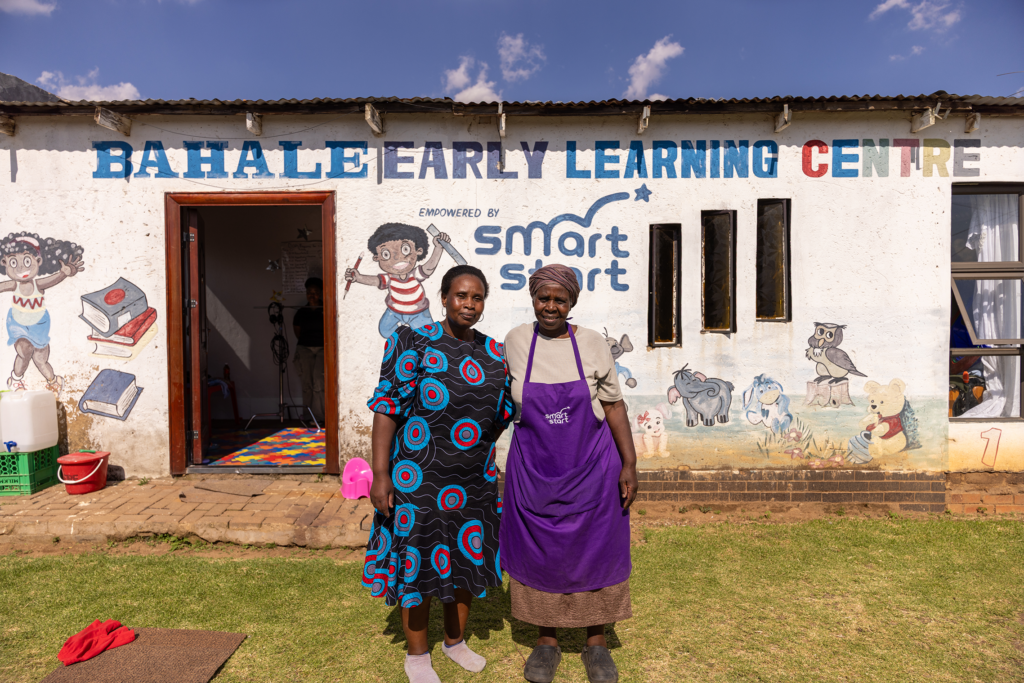
In Slovoville, Johannesburg, Phillistus Jaxa and her mother, Ntswaki Ramoleta, run Bahale Early Learning Centre together.

Before entering early learning, Phillistus ran a business with her mother selling fat cakes. When COVID-19 lockdowns disrupted their livelihood, both women found themselves without work. In 2021, Ntswaki was introduced to SmartStart and, after completing start-up training and meeting venue and compliance requirements, opened Bahale in 2022 with three children.

Phillistus joined her mother in 2023. Through door-to-door recruitment and word-of-mouth referrals, Bahale now serves 20 children.

For Phillistus, the work has become more than a livelihood.

“I love them. When I am with them, I become one of them,” she says.

Working alongside her mother has also strengthened their relationship. “It’s made our relationship stronger,” she says. “Even before starting a daycare centre, we were close, but the experience has brought us closer.”

Ntswaki agrees: “We work well together. I wanted to work with her because she is my daughter.”

Their centre is now full, and they have to turn families away because there is not enough space to meet demand. Yet their impact reaches beyond the children in their care. Through the provision of a safe, nurturing and stimulating place for young children, Bahale gives parents greater freedom to work, look for work and participate in community life.
Care that creates opportunity

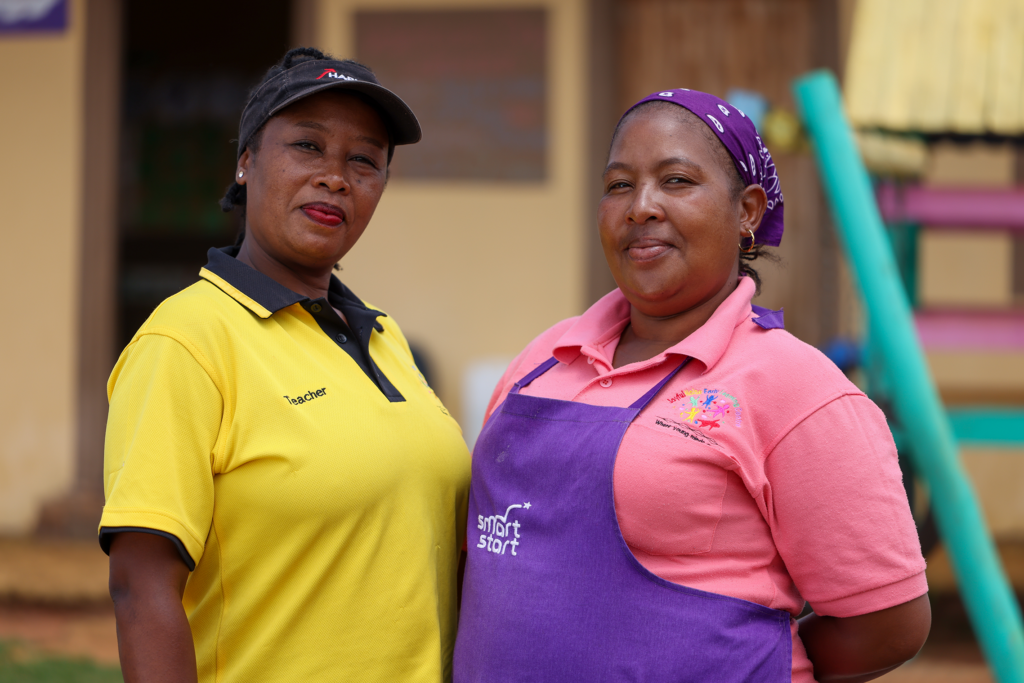
In Phelindaba, Zanele Mahlangu begins her day at 04:00AM, preparing breakfast for the 40 children enrolled at Joyful Noise Early Learning Centre.

Zanele had long been interested in working with children and previously worked as an assistant at a daycare centre. In 2022, she opened Joyful Noise on land she had originally intended to use to build her home. Today, she employs two people, including her older sister, Phindi, who joined the centre in 2023 after losing her job during the pandemic.

“My sister raised me; now I am the one picking her up,” Zanele says. “She is very supportive, and I am happy to be working with her.”

Zanele sees early learning as a way to change what is possible for children in her community. In Phelindaba, as in many informal settlements, families face significant social and economic pressures. Some parents may not fully understand the importance of early learning, while others struggle to access affordable, quality services.

Zanele responds by meeting families where they are. She brings children into the centre, nurtures their development and prepares them for school and the next stage of their lives.

“I am grateful to SmartStart because they have empowered me to make a difference in my community and in the lives of the children I meet daily,” she says. “Through this, I am able to put food on the table for my children. My wish is to provide top-quality early learning in Phelindaba, with parents trusting me with their children and knowing that their children are safe with me.”
Care that reaches children who might otherwise be missed

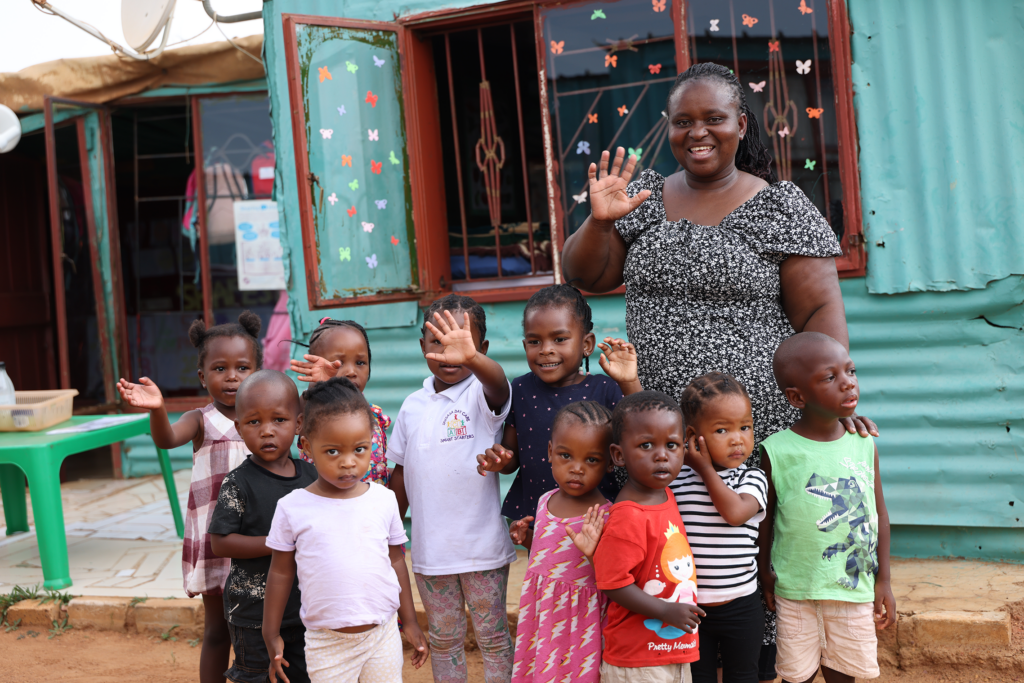
In Doornkop, Slovo Extension, Thandeka Jwente’s early learning journey began with a neighbour’s request.

In January 2024, a neighbour asked whether Thandeka could look after her daughter while she went to work. Soon, more parents asked if their children could come to her while they worked or searched for employment. As demand grew, Thandeka completed SmartStart training in April 2024 to strengthen her skills and build a sustainable early learning enterprise.

Today, Ikusasa Day Care Centre cares for, and nurtures the learning and development of, 11 children.

Doornkop is an informal settlement where access to services such as electricity, water and sanitation remains limited. Many families rely on social grants, and not all parents can afford early learning fees. Thandeka understands this reality. When she saw a child alone in the fields while her mother worked, she asked the mother to bring the child to her centre. When the mother explained that she could not afford the service, Thandeka welcomed the child anyway.

Thandeka has also employed an assistant to help prepare meals for the children. She wants to grow Ikusasa into a fully equipped centre with the resources children need to learn and play.

Her work shows what inclusive care can look like in practice: recognising a child’s need, responding with compassion and refusing to let poverty determine whether a child gets a strong start.
Care is infrastructure

These stories show why early learning and care must be understood as infrastructure.

When a practitioner opens a centre, she is not only creating a place for children to learn but is also enabling parents to participate in the workforce. She is creating employment. She is building trust in her community. She is helping children develop the confidence, language, relationships and curiosity they will carry into school and beyond.

Quality early learning gives children a stronger start in life. It also strengthens the care economy – the essential work, mostly carried out by women, that enables families, communities and economies to function.

SmartStart’s model is built on this understanding. In supporting practitioners to run affordable early learning programmes from home and community venues, SmartStart helps turn care into recognised, skilled and sustainable work. Its network of 16 000 practitioners reaches 200 000 children every week, while creating livelihoods and strengthening local economies.

A shared responsibility

Ntswaki, Phillistus, Thandeka and Zanele are not simply providing a service. They are responding to the needs of their communities with skill, resilience and care.

Their work reminds us that behind every child who arrives at an early learning programme is a family trying to make a life. Behind every family is a practitioner who shows up early, prepares food, teaches through play, holds a child’s hand and helps them believe they belong.

On International Day of Care and Support, we recognise the women who make this possible.

Care is not separate from development. It is not separate from the economy. It is not separate from education. Care is infrastructure, and investing in it is investing in every child’s future.
29 May 2026

SmartStart’s work is rooted in a simple but powerful belief: every child deserves access to quality early learning from the start. In a recent interview with Business Minds Media, CEO Grace Matlhape shares more about the SmartStart’s vision, the importance of early learning in South Africa, and the role the organisation plays in helping to build stronger foundations for children, families, and communities.

The conversation highlights the scale of the challenge, but also the opportunity to create meaningful change by supporting practitioners, strengthening systems, and expanding access to early learning in communities that need it most. It is a reminder that investing in young children is about education along with dignity, equity, and long-term social impact.

Read the full article here: Grace Matlhape on Business Minds Media

22 May 2026

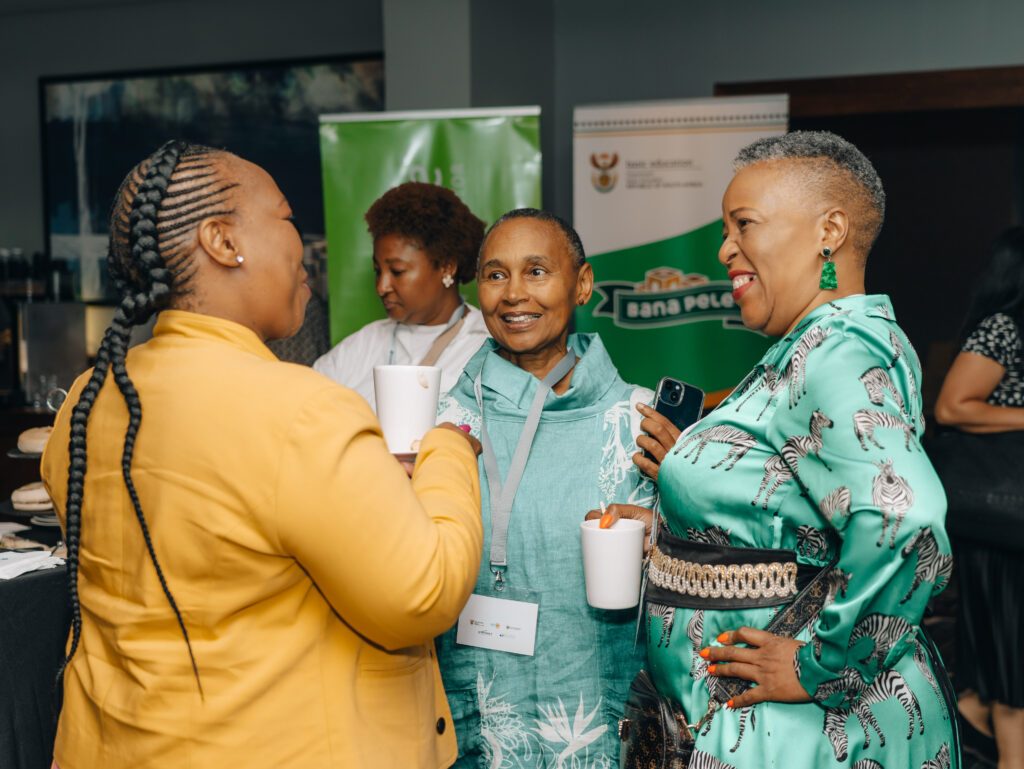
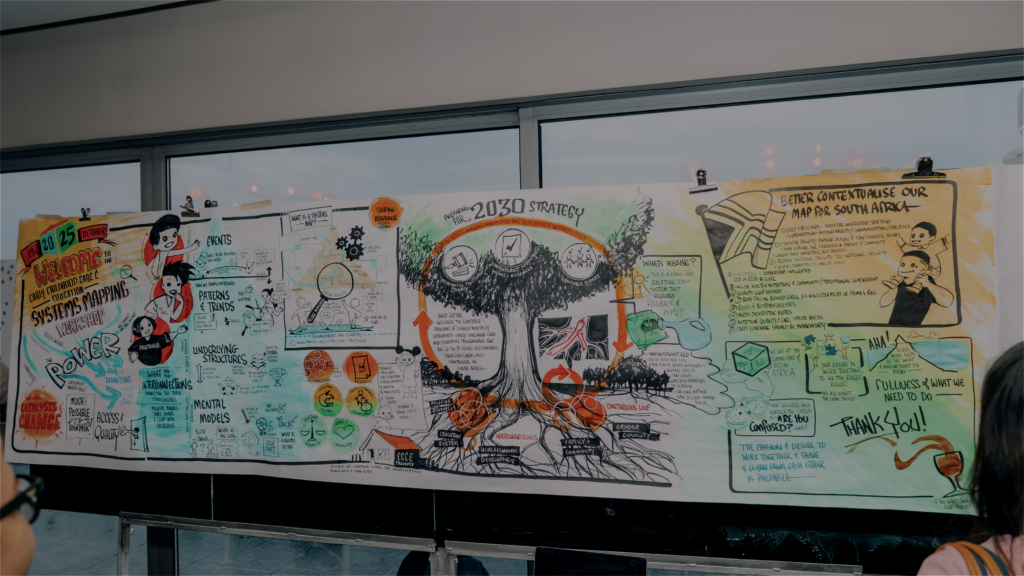
In October 2025, SmartStart, the Department of Basic Education, Ilifa Labantwana, Harambee Youth Employment Accelerator and ECDAN convened a two-day Early Childhood and Care Systems Mapping Workshop with practitioners, parents, government officials, civil society organisations, funders, academics and international partners to examine how South Africa’s ECCE system works in practice, and what it will take for universal access to become a reality.

South Africa’s recent commitments in ECCE are significant and worth naming. The 2030 Strategy for ECD Programmes, the Children’s Amendment Bill, the mass registration drive, and the newly published Bana Pele Shared Blueprint — which calls for a shift from slow, linear progress toward rapid, exponential transformation — reflect a sector that is moving. And yet too many children, particularly those in the most marginalised communities, are still not reached.

What the room surfaced was more layered than a simple diagnosis of what is broken. The systems mapping process revealed a sector with genuine momentum alongside deep structural friction — and being honest about both matters.

The bright spots are real. ECCE is rising as a political priority, reflected in recent policy shifts. Public awareness is growing. Strengthened data systems are improving planning. Active advocacy coalitions are beginning to align around shared priorities. And informal home and community-based programmes, operating in the most marginalised and hard-to-reach areas, continue to reach children who would otherwise have no access to early learning at all.

But the frozen points are equally real, and they are stubborn. Inequality continues to drive uneven access. Compliance barriers stall the expansion of affordable quality programmes. Children with disabilities are still excluded. And system fragmentation creates silos that dissipate effort rather than allowing it to add up to something greater.

The women who deliver early learning — as practitioners and as the parent figures making daily decisions about their children’s care — carry a weight that the system rarely acknowledges. For practitioners, this invisibility shows up in low wages, weak support and high attrition. For caregivers, it shows up in the absence of information, services and genuine support that would free them to make real choices about their own lives.

What the workshop also surfaced is where the catalytic leverage lies. We identified a set of shifts that, if unlocked, could move multiple parts of the system simultaneously — sustainable public financing; regulatory reform that supports diverse delivery modalities; stronger investment in practitioner development and remuneration so that ECCE practice becomes a viable, recognised profession; and more deliberate partnerships between the state and those who support delivery — because while government is the duty bearer, universal access cannot be achieved without partners, and those relationships need to be better structured and more intentionally supported.

The systems mapping process offers a shared picture of how the system actually works — who connects to whom, where effort is being absorbed without impact, and where a shift in one place could unlock movement in others. 

The full report is available on our website and can be accessed using the button below. We share it as a tool for ongoing learning and alignment — and as an invitation to keep having this conversation, collectively.

View Report

7 April 2026

MEDIA RELEASE

With an innovative social franchise model, SmartStart is providing early childhood education for South Africa’s children—and economic opportunity for communities 

Washington, DC, April 7, 2026—Today, the Skoll Foundation announced SmartStart as one of the three organisations that will receive the 2026 Skoll Award for Social Innovation. The award provides unrestricted support to nonprofit organisations with a proven track record of advancing transformational social change on intractable global issues.   

Through innovative public-private partnerships, thoughtful community integration, and systems-level thinking, the 2026 award winners are driving measurable progress on child health in Pakistan, early learning and development in South Africa, and civic technology and public benefits access in India. Together, these remarkable organizations are advancing a sustainable world of peace and prosperity for all.  

The Foundation will present the awards and celebrate the leaders of each recipient organization during the 23rd annual Skoll World Forum, held April 21–24 in Oxford, U.K. and online. The Awards Ceremony will take place Thursday, April 23, from 5:00–6:30 p.m. BST at the New Theatre in Oxford and via livestream. Click here to register to attend the Forum online, or email press@skoll.org to request a press pass to attend the Forum in person. 

“This recognition strengthens our resolve to tackle poverty at its roots, because there is no way we can put up a fight against poverty without working on the system as a whole,” said CEO Grace Matlhape. “Early childhood development is one of the most powerful levers we have to break the cycle of intergenerational poverty, and this award helps us deepen and scale that work. The recognition truly belongs to the thousands of women in the SmartStart network and to our implementation partners, whose hard work and commitment are changing children’s lives every day.” 

“This year’s winners of the Skoll Award for Social Innovation prove that when bold, creative leaders set their sights on a problem, their resolve and commitment lead to global systems change. Through innovative partnerships with affected communities and cross-sector collaboration, they are driving impact and lasting change in the fields of health, education, and public benefits,” said Marla Blow, CEO & President of the Skoll Foundation. “Even in the face of profound shocks to the social impact space, these organizations are not simply maintaining their impact; they are increasing it exponentially. We hope their stories will inspire other social entrepreneurs to continue their pursuit of transformational change.”    

More details about SmartStart: 

High-quality early childhood care and education boosts child outcomes, creates new jobs and enables parents to work. Yet in South Africa, over one million 3- to 5-year-olds don’t have access, perpetuating the economic exclusion of poor communities. SmartStart’s model enables underemployed community members to convert their homes and community spaces into licensed early learning enterprises for excluded children. By combining training, materials, coaching, compliance support and peer networks, SmartStart’s social franchise model makes quality early learning affordable, accessible and community-owned. At the same time, the model unlocks stable, dignified livelihood opportunities for thousands of microentrepreneurs. Through deep collaboration with government and other partners, SmartStart has grown into South Africa’s leading early learning network, with 15,000 programs currently reaching 160,000 children per week. The organization is now building the systems, capabilities and partnership to grow its impact beyond its direct delivery footprint and reach 1 million children by 2030.   

About the Skoll Foundation: 

The Skoll Foundation catalyzes transformational social change by investing in, connecting and championing social entrepreneurs  and other innovators who support them who are advancing bold, systemic solutions to the world’s most pressing problems. In 2025, the Skoll Foundation directed nearly 80 percent of its funding in support of global social entrepreneurship, with 55 percent directly reaching its community of Skoll Awardees and other social entrepreneurs.

For more information, please contact:     

Marietjie Engelbrecht, marietjie@smartstart.org.za 
Rachele Hayward, rachele@resource-media.org 

We've won the 2026 Skoll Award for Social Innovation! Recognised for expanding access to quality early learning across South Africa. Find out more →